|
two of the stars in our leopard film for the BBC - "A Darknesss in the Grass"
For most of my life I’ve enjoyed the privilege of travelling to some of the remotest corners of the world to film wildlife and I realised right from the start just how lucky I was to make a living doing what I love. So it strikes me as ironic that despite rising to the top of my profession and being in demand from all the world's major broadcasters, what I'm best remembered for now is a fishing series that was only filmed when I had time between major wildlife shoots. Don't get me wrong. I've never worked harder and used all the tricks in the book to try to transport our audience to another, more magical world because I've been passionate about angling since childhood and was really keen to try do it's universal appeal justice. And so, with the help of Chris Yates and Bob James, "A Passion for Angling" was born.
This is a scene from the final programme of the series called 'Monster Myths', the story of our quest for a record carp - we did see it but no, we didn't catch it but it's my favourite film of the series because it was such a good story of a quest for a truly mythical beast in a beautiful corner of southern England.
I also loved our 'Midwinter Madness' film on the Kennet, not just because I could catch two pound roach in our downtime but because we caught many fine fish in stunning frost sparkled days, including Bob's two twenty plus pike, a suitably surprising conclusion to another good story.
The curry and port were a tasty celebration to end the day.
So, to put the record straight about my work, I thought I might add a few words about my 'day job' to put the making of our series in some sort of context.
Wildlife has been a passion of mine since childhood and after leaving film college in 1965 I started my career working with the BBC Film Unit on such legendary programmes as Dr.Who and Porridge. I left the Beeb in 1973 and since then have been lucky enough to spend nearly fifty years out in the wilds with some wonderful animals and people.
|
 |
| a polar bear hunting the pack ice at midnight for our BBC series of three films "Kingdom of the Ice Bear" |
One of my early productions
was a three part series Mike Salisbury and I filmed and produced for the BBC Natural History Unit about Arctic wildlife, working with many great scientists, the wonderful Inuit people and of course,
the charismatic polar bears.
 |
| close enough! |
 |
| happiness is being high up in remote places |
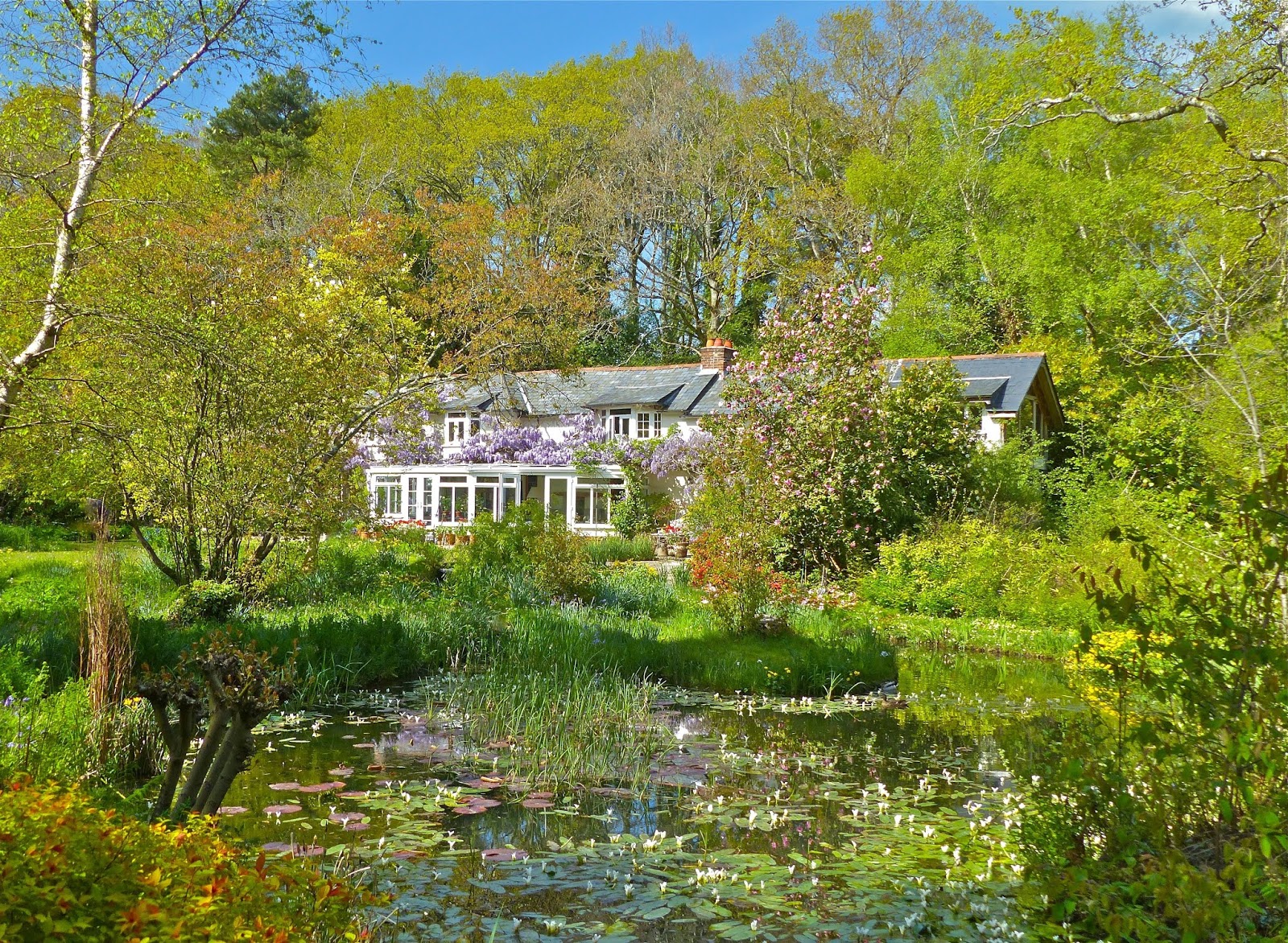
However, if you look up Hugh Miles on the internet you’d think, judging by the pictures I see banded about that all I ever do is go fishing … if only … but it’s simply one of many hobbies I enjoy, gardening our two wooded acres being the most time consuming, especially as a stream flows though our patch and by damming it in several places we’ve created five ponds.
Chris Yates' children Alex and William each enjoyed catching their PB's from them, so they've proved a happy asset for us all but since the turn of the century, our local otters also think it's a splendid place to fish. It's a privilege to have them in our wildlife garden but our fish are wildlife too and they keep on being eaten, so otters are a mixed blessing.
 |
| I think he's checking to see if I have a rod licence |
 |
|
It's always a relief to return home alive and well and enjoy a few days of family time but my job as a cameraman/producer required me to ‘live on the edge’ and there's sometimes risks involved. But I’ve always admired that famous visionary who restored the glories of the Gardens of Heligan, Tim Smit because he believes that “if you’re not living on the edge you’re taking up too much space"!
You can't get much closer to the edge than trying to film snow leopards and though I’m
no publicist, I keep on being encouraged to tell some stories from the bush ... and I’ve been extraordinarily lucky to live with
charismatic animals and many marvellous folk. It's a privilege to savour and share.
Filming in Ladakh in
the Himalayas for ITV's "Searching for the Snow Leopard" created more than a few stories to tell but we
usually saw only footprints. You can see some up the snow slope to
the right - tough walking country but not for snow leopards! Camera traps enabled us to identify individual cats. This was our territorial male called Mikmar at 15,000ft.
 |
|
 |
|
Another challenge was filming for David Attenborough's "Planet Earth", taking me up into the Himalayas and close to Everest. I'm never happier than walking in the mountains, even if it means carrying heavy camera gear to capture the animals on film.
 |
The Himalayas become ever more inspiring the higher you climb and the locals were wonderful, so friendly and helpful and they showed me the Impayan Pheasant, Nepal's national bird, also called appropriately 'the bird of many colours'.
|
 |
|
 |
| the star when filming our BBC leopard film called "A Darkness in the Grass" - |
I
have had more than my fair share of special memories and writing about these adventures is enjoyable, so I thought I might write a few stories about filming leopards in East Africa but on reading through my journals, I’m finding that we had so many exciting moments it requires too many words to describe, so I'll just add a few pictures from some of my other films and carry on writing about leopards another day.
As any photographer will have already noticed, I'm not a 'proper' stills photographer because if something good is happening I need to have the film camera in my hands to capture the action. Compromising the quality of the movie isn't an option so I've never taken many stills. Those I do are strictly happy snaps but don't get me wrong, I love taking pics but don't have a fancy camera with auto focus etc. In fact, most of the pics are taken before the digital age on slide film using cameras that should be in a museum.
Anyway, the first major wildlife film I made was when I was head of the RSPB Film Unit. I'd made enough films for them about robins, blue tits and other cute birds so needed something bigger and more exciting to challenge me. I needed to look no further than one of the most charismatic birds in the world, the osprey.
 |
| mum with two chicks almost ready to fly - one of several intimate moments filmed from the top of towering scaffolds |
Such is the birds charisma that if I could nail some spectacular fishing dives and intimate scenes at the nest I stood a chance of being noticed by the BBC Natural History Unit and after two challenging but ultimately successful years my reputation rose like the ospreys splash and on completion, I joined the ranks of the self-employed.
As a postscript, the film eventually sold to over forty countries so it turned out to be a nice little earner for the RSPB and as a staunch supporter since childhood, I was pleased too.
 |
| strike action! ospreys are such exciting birds and filming them for my RSPB movie was memorable |
In spite of eight years at the BBC Film Unit in London filming all manner of programmes along with the five years at the RSPB, I was still a comparative novice in the wildlife filming business so it took a deal of courage on the part of producer John Sparks to trust me with the final shoot for what became the first of David Attenborough's ground breaking series, "Life on Earth".
My contract was for a month but within two weeks I was back home, a mixed blessing as I'd just spent over £20,000 on camera equipment and only received two weeks pay instead of four. However, my reputation was enhanced, for we'd filmed the lions making a double kill on the first day, another kill to match it on the second, then captured the rare sequence of two male cheetahs catching and killing a wildebeast. It was a remarkable run of good fortune and it's been downhill ever since!

These
early successes meant that the world was opening up for
me and next up I was lucky enough to be picked to film another extremely
popular three part series for the Beeb,"Flight of the Condor".
 |
| the Andes Mountians in southern Chile - one of the most stunning locations in the world |
 |
| Torres del Paine National Park is home to many condors and was our filming base for a few weeks © Laurie Campbell |
The
three films told the story of an exciting journey from the very tip of
South America at Cape Horn, following the Andes north, all the way
through Peru, then into the Amazon Basin in far off Equador.
One
of the most exciting moments when filming in the Torres del Paine
National Park in Chile was the brief sighting of a puma. This lit a fire
so inspiring that I made a vow to return one day to try to make a film
about these elusive cats.
 |
| my star cat 'Penny' the puma that I lived with on and off for more than two years ... © Laurie Campbell |
My wildlife career was moving forward nicely and many new commissions came my way but I'll skip those for now because for a few years, otters became the focus of my life.
 |
| at home on the wild and windy shores of Shetland |
In the early eighties the Shetland Isles were one of the few places that otters could be reliably seen and it's difficult to believe that they were pretty much 'extinct' in most English counties. This 'rare' animal had never properly been filmed because they were regularly persecuted ... until the seventies hunters in Shetland received a bounty, so I had a big challenge ahead ... nothing like being thrown in at the deep end to film 'impossible' animals.
 |
| what a privilege it was to film these beautiful animals in Shetland's wind and rain ... though the sun did shine too |
I only had one sighting in the first ten days but eventually won some success by habituating a particular female that after several weeks trusted me enough to be close to her and her cubs.
 |
| seriously cute or maybe not? - three plus months of 'playful' but eventual killers |
She would even swim up to me, so it was a magical experience and over about four years I made three films about her, the first of which was an Attenborough BBC "Widlife on One". As otters had hardly ever been seen on TV it was an extremely popular programme and garnered an impressive audience of 17.3 million.
 |
| they were always fond of lumpsuckers, a big meal and easy to catch |
I took loads of pics of her and the cubs because I decided to write a book about living with these wonderful animals in the farthest corner of the British Isles.
Now they are everywhere in the country and it's ironic that instead of the long journey to the Shetland Isles I can now film them in our garden in Dorset, eating our fish! Their recovery is one of conservations' greatest success stories, though I doubt many ducks and fish think it's cause for celebration.
 |
| the post office in the capital, Thimpu |
Many more films followed before planning a three part series for ITV on the wildlife of the Kingdom of Bhutan, 'The Land of the Thunder Dragon'.
I had already completed an extensive recce with the World Wildlife Fund and was all set to start filming when Bhutan suffered terrorist incursions from tribes in northern India.
 |
| climbing over a high pass with the Tibetan mountains in the background |
I was asked by the government to postpone filming, so found myself with the shocking prospect of no work for the three years I'd planned to be in the Himalayas.
 |
| Chomolhari - Bhutan's sacred mountain and at 24,000ft, it's highest |
As one door closes another opens and I suddenly thought that here at last was that opportunity to make a fishing film. As they say, the rest is history because by June 16th we were filming "A Passion for Angling".
 |
filming the crazy scarecrow sequence ... but it worked
|

The initial filming was funded from my wildlife travels and then the BBC commisioned the series and paid for about half the costs. The rest I had to earn and as 'Passion' cost over £400,000 to produce I had to work hard to pay for everything. This meant travelling the world on as many films as possible then filming Bob and Chris on return and hoping for good weather. Money was very tight but luckily I was invited to take part in a long expedition to Antartica.
The executive producer was Alastair Fothergill and his six part series was called "Life in the Freezer", a memorable event and winner of a team BAFTA along with huge audiences.
It was such a privilege to visit this remote and magical land, to be surrounded by a million penguins and crunching our way through the pack ice to reach them. Our skipper Jerome's steel yacht was smooth sided when we left the Falklands but after forcing our way through thick ice to find the wildlife it was distinctly corrugated by the time of our return.
|
|
|
|

More 'Passion' filming followed quickly upon my return as we now had some cash in the bank, so some summer and autumn sequences were added to the third and fourth programmes.
 |
| Chris trying to find a silver tourist on the Wye for programme 3 - 'In Search of Salmon' |
 |
| stars of stage and screen - Bob's lovely dogs Wraps and Chester were an integral part of many sequences |
 |
| Bob trotting the Hampshire Avon for our autumn film |
 |
looking for those elusive two pound roach on the Hampshire Avon - we found them too, all ten of them!
While filming Bob and Chris I was planning that return to South America I'd promised myself all those years ago, hoping to film that most charasmatic of big cats, the mountain lion.
I managed to convince National Geographic TV that they should fund the project but I didn't make it there until late in 1993 because we had to finish our four and a half years work creating "A Passion for
Angling". We had no idea how well it would be received and neither did
the BBC Executives but we all watched in disbelief as the audience
increased each week to a high of 6.3 million. |
 |
| our son Peter with his first barbel and a proud dad behind the camera |
It seemed at the time as if we'd struck a chord with both anglers and non anglers and the BBC showed it five times before asking us to make another series, even to the extent of saying that they would make it more than financially worthwhile if we did. At the time we thought enough was enough and luckily, we were right.
 |
| happy days, especially when the big roach are biting |
After the years of the hard graft creating the series we felt that we had said what we wanted to say about the magic of angling and now find it increasingly remarkable that the series is still hitting the spot, even though twenty eight years have passed since June 1989 when we made those first tentative casts into the legendary Redmire Pool.
We
feel very fortunate that the films are still enjoyed by thousands of
folk and grateful that Chris, Bob and I have so many happy memories of going
fishing in all those beautiful places. It was a privilege just to be there and sharing it with you all makes it even more rewarding.
Copies of our DVD of the six part series can still be puchased from Sue and I via our website - www.passionforangling.info