Saturday, 30 January 2021

SAVING WILDLIFE - PUMA


                  SAVING WILDLIFE - PART ONE - PUMA


Having been passionate about wildlife since childhood, it seemed natural to want to help it flourish, so once I'd achieved my goal of becoming a wildlife film-maker, it was a no brainer to try to benefit the animals I was lucky enough to make films about for broadcasters around the world.

Three programmes stand out as examples of how television can directly help wildlife, the local people and their rural economies. One on Snow Leopards in the Himalayas was a success, a film about Newfoundland's fishing industry very moving and one about Pumas in the Andes Mountains of Patagonia a life saver for those big cats.

Yes, I know the common attitude is that ‘it’s only television and all the programmes are rubbish’ but no-one can deny that the many BBC films with David Attenborough are wonderful and have not only entertained but educated us about wildlife around the world and the increasing challenges that so many species now face. Global warming is a threat to us all and Sir David is making us increasingly aware that we need to act and we need to act now. 

I’ve been privileged to contribute to several of David’s films and though the three examples I’ll tell you about were my own productions and less 'important', they did directly benefit the local wildlife in ways that make me proud.


                        “PUMA - LION OF THE ANDES” 


Heading into the mountains in Southern Chile in 1993 to try to make a film about pumas for National Geographic TV and the BBC was a daunting task, not only because they had never been filmed before but because they were persecuted relentlessly by the local gauchos for killing sheep. 

These big cats are notoriously shy everywhere, so much so that the world’s leading authority on them, who goes by the wonderful name of Maurice Hornocker only saw them four times during his eight years of study in North America. Up in the Rockies they are called cougars or mountain lions and in South America by the native name puma, meaning ‘strong and powerful'.


I was camping out in the glorious wilds of the Torres del Paine National Park but despite the protection this Unesco site provided for wildlife, the gauchos would come into the park and kill the pumas to protect their sheep, then claim the bounties from their estancia owners. 

My sole companion and assistant Donaldo McIver, himself a gaucho from Argentina, found the early stages of our two year quest really difficult, for the big cats would flee at the mere hint of a human presence. Finding out where the cats might be and how to creep around without being seen was a steep learning curve and after our first few weeks we had only a few sightings and hardly any worthwhile film. 

Failure wasn’t an option, so I decided to try to concentrate on one particular young female we'd located. She seemed slightly less scared than all the others and playing on the theory that ‘curiosity killed the cat’, I started a game of cat and mouse to try to habituate her to my presence … and no prizes for guessing who was playing the mouse. Progress was slow but after about four months she allowed me to walk in the mountains with her, even sleeping just a few metres away from my camera. Being trusted by a big cat that is normally terrified of humans is as good as life gets for a wildlife film-maker.


Sadly, her life hung by a thread, for one day two of the local gauchos illegally entered the National Park on horseback. They were armed with rifles and fifteen assorted dogs to hunt and kill pumas and judging by the blood and spent cartridge cases in several caves, they were successful. Our cat we called Penny disappeared and we sat on a mountain side fearing the worst, tearfully accepting that if she was dead, our dream of success was over. 


The park authorities called the police, including a firearm specialist from Santiago to analyse the spent cartridge cases but no gaucho would be fool enough to leave out the gun that killed the pumas, so there was no prosecution. 

Luckily, Penny had survived the onslaught and after our two weeks of desperate searching, she reappeared in her regular haunts and though more nervous, we were once again in business. Fearing that our film was threatened, Donny and I decided to bribe the leading gaucho in the hope he would leave our precious cat alive until the film was finished. So armed with armfuls of pesos, my assistant Donny’s experience as a gaucho and speaking their language, he was able to negotiate a stay of execution and Penny was left alive. So, to cut a long story short, after 250 days out in the wilds with my cat, spread over two and a half years, the film was completed and went on to win numerous awards.

However, the real success achieved by this film was the way it attracted the attention of broadcasters from around the world and many film crews followed my tracks to make films about the cats. Torres del Paine became a mecca for photographers and wildlife film-makers and this publicity of the park’s wildlife and beauty has attracted thousands of tourists and their dollars. 

This sounds like bad news for shy cats but as the money flowed in to the rural economy, the estancia owners realised that pumas were worth a lot more than sheep so stopped shooting the cats and set up lodging for wildlife tourists instead. The dollars flowed in, the number of pumas increased and they slowly became more habituated to humans which allowed great film and pictures to be taken.


I'm told by friends who visit the park regularly that the pumas have thrived ever since and everyone is happy, though I’m not so sure that guanacos, their main prey will share my enthusiasm.


However, they too have benefited from the more relaxed estancia owners and all the parks wildlife has increased too, so this is good example of how a ‘mere’ television film can directly save wildlife. 

Snow Leopards in the Himalayas and the benefits our film and BBC ones made for these charasmatic cats and the local economy will follow when I've finished preparing our marsh for the imminent spawning of our frogs.


The pics of our Penny the Puma are by my friend and ace photographer Laurie Campbell who joined Donaldo and I for a couple of weeks and who owns the copyright. Thank you Laurie.

Friday, 25 December 2020

HAPPY DAYS WITH FRIENDS


Christmas - a time to celebrate our days of joy with family and friends during these past years and to look forward to many more wildlife and fishing adventures during this next year.

Yes, we’re well aware that a virus is running riot so for now, all of us will keep ourselves isolated from our nearest and dearest and try to stay alive … and if Sue and I don’t succeed, this could serve as a goodbye!


But before we leave … and contrary to most people’s attitude to writing Christmas cards, I really enjoy the process because it means our friends are instantly on my mind and the more I write in each card, the longer I’m with them in spirit, regardless of not having seen them for years. This enables us to pass on our news and love and every card is rewarding because for a moment, they’ve been right there with us.


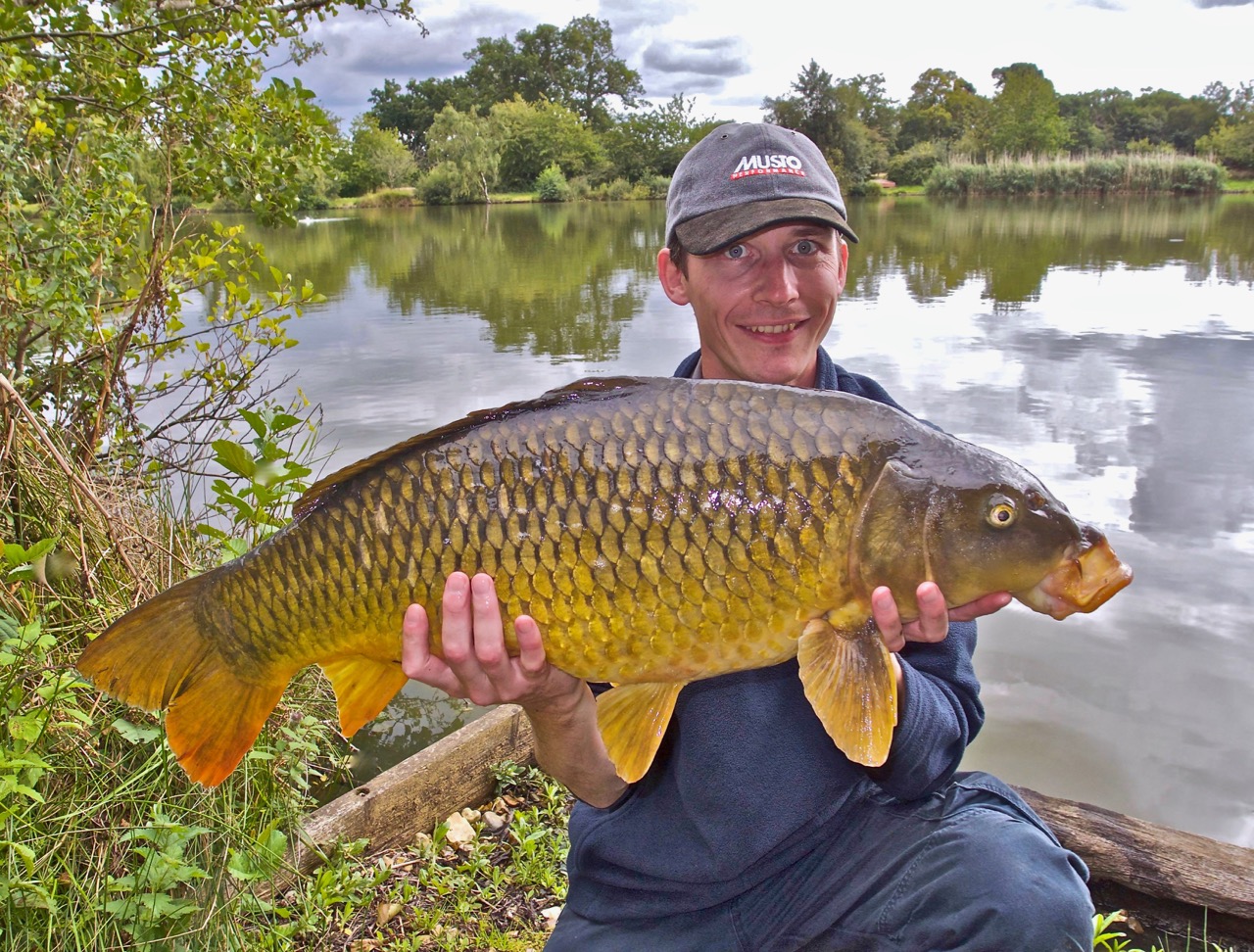
Sue and I are blessed to have so many to write to and I for one know it’s a privilege to share the fun of fishing with all my worm dangling friends. So I hope you enjoy sharing this selection of catches they’ve made during these past few years. And I'll start with those I fish with most, my computer guru and good pal Chris Wild, with whom I shared the excitement of stalking this beautiful 22lb common carp in the shallows of a local lake.


Next up is Steve Derby for he allows me the privilege of sharing his rig for mullet fishing in Christchurch Harbour and we had a splendid year of success, catching quite a few up to six and a bit pounds, along with some lovely roach. I know I’ve banged on about how hard mullet fight but if you’ve ever tried to land one, you’ll know that they never give up and in shallow water, the battles can be seriously exciting.


Also a fan of mullet madness is Steve’s long time friend, Brian Naylor, an ace angler who delights in making me jealous by telling stories of battles with giant sea trout in South America. We’ve shared a few scares together too as the feisty mullet try to break our line among the anchor chains.

Another fish that pulls a bit is the Indian Mahseer and I enjoyed some wonderful holidays there in winter sunshine, having been invited to join Steve, Brian and not least that ace barbel angler who helped us with our TV series ‘Catching the Impossible’, Pete Reading. 


He caught us a twelve pound barbel to order and had lots of big mahseer during our adventures and it’s such a shame that those holidays together are no longer possible because the great wildlife and birding we enjoyed was only matched by our laughter.
Another friend sharing our Indian trips was Gerry Higham. He got lucky and caught a fifty pounder that
for half an hour, dragged him all over the river in his coracle. He's an all rounder so is just as keen on catching delicate crucian carp in one of our local lakes.


Gerry is a lifelong follower of Manchester United and he kindly invited close friend Chris Yates and I to enjoy a match with the club we support, Southampton. Being in ‘The Theatre of Dreams’ was dramatic, with 70,000 fans cheering their teams and it must be very odd for the players today to compete in front of empty stands.


Chris and I love our crucian fishing and have shared many memorable days trying to spot their sneaky bites ... and sometimes succeeding.

Chris also loves his perching but on this occasion he’d forgotten his rod so, shock horror, he had to fish with one of my carbon ones and I promised not to tell anyone that he’d broken his tradition never to use such a modern monstrosity.

Though I do enjoy crucian fishing, especially with Chris, my first love is roaching and I particularly like this pic of Stuart Wilson, the legendary keeper at the LAA’s Britford fishery with a sparkler. 


I have many friends who love their roaching, including Malcolm Swinfen and luckily we've shared several two pounders. We also exchange fishing stories by email and with Malcolm being a good writer, they make enjoyable reading.

Many of our friends love catching big roach - of course they do, they are the best fish - and one who has done more than most for us anglers this last year by enabling us to start fishing again after lockdown is pal and Angling Trust guru Martin Salter. I was pleased to be alongside him when he caught this great big roach from the River Test. It wasn't quite a two pounder but it looks it!


I can't mention roach without acknowledging the lifetimes work of Trevor Harrop and Budgie Price and it's partly due to them that we can now trot the Hampshire Avon for roach again and stand a reasonable chance of catching one. Here they are landing a big chub! Sorry about that but I couldn't find the one of Budgie landing a roach of nearly two pounds.

I have friends who sometimes prefer bigger fish than roach and I was so lucky to be invited to join those ace angling archivists, Keith and Sandy Armishaw for a holiday sturgeon fishing in Canada. What's more, we had such a good time I was invited again and boy, did we catch a lot of big fish. 


This monster of Keith's took him 1hr 28mins to land and I caught one close to that size. We got very wet when it flapped and being  stuck in the mud, we had an early bath - cue laughter.


We also visited Vancouver Island, fishing not far from where Prince Harry and Megan lived for a while, and the salmon fishing was a bit special, Keith landing this monster King Salmon on trotted salmon eggs and I caught several beautiful fresh run silver bars on a fly.


Luckily I'd been taught to cast by John Slader, an Orvis guide on the Test and stalwart of the Salmon and Trout Conservation Trust, so I was extremely fortunate to catch fish instead of trees. We had shared a grand bone fishing holiday out west and now we share roach fishing on our poles alongside the Avon and enjoy that just as much.

I have other pals that love fly fishing too, non more so than Jim Wreglesworth. He catches some gorgeous big brownies from our local rivers on the fly, loves roach fishing and shares a love of tench, catching lots of fiesty smallish ones with me one evening. He was quite happy!

I have another great friend who I've fished with for many years and he's an inspiration because he makes such a commitment to achieve success and nearly always does, Mark Woodage. Only two years ago he caught a roach of 3lb14ozs from an 'impossible' water and helped me to catch one of 3lb10ozs so we were both rather happy chappies. He loves his tenching too and we've shared many happy days in the summer sun along with blanking on frosty mornings.

One angler I always look forward to joining for our trips down memory lane is Martin Bowler. We spent four years together creating our Ch4 series 'Catching the Impossible' and amazingly, after all that pressure to catch big 'uns, we remain the best of friends. 


I helped him out with a bit of filming for one of his productions a few years back and we will never forget the day when he caught giant perch of 4lb5ozs, followed soon after by a true monster of 5lb4ozs. He is arguably the finest all round angler in the UK and a lovely bloke too so I count myself lucky to call him and his wife Jo friends.
I haven't been fishing much this last year due to a need to hide away and I've missed our journeys into the wild, not least to the Hebridian Island of Islay where nearly thirty thousand barnacle geese spend the winter, the scenery is stunning and the malt whisky from the islands' eight distillaries is delicious ... but dangerous.

Here we are with our close friends, ace wildlife cameramen Michael and Penny Richards and the legendary John Aitchison who was trying to film golden eagles catching geese! They do you know.

We go to Islay together as often as possible, along with other birding holidays but our annual New Year celebrations with Michael and Penny and Rick and Jen is cancelled this year for obvious reasons. It's sad as we've never missed the get together for the last thirty nine years. This pic of us on the West Somerset Railway makes me think of that exclamation in panto "it's behind you"!

We'll just have to be patient and wait for 'together time' when the worst of the virus is over. Finger's crossed it won't be too long, but in the meantime, Sue and I are lucky to have a lovely big garden to look after and keep us fit. Our wildflower meadow is butterfly heaven.


Our daughter Katie and partner Simon love their gardening too and are joining us for Christmas lunch from just up the road but very sensibly, our Pete decided it was too risky to come from Plymouth as he didn't want to kill the old folk!


We'll hopefully be seeing him in the Spring when everything is smelling of roses and our world slowly returning to normal. ... and it won't be long before summer glows with life and we're picnicking on the top of Dorset's Golden Cap.
Until then, have a great Christmas and stay safe always ... and thank you to all my fishing pals for their great company and all the laughs. 

With our love and best wishes, Hugh and Sue.


Thursday, 5 November 2020

AUTUMN GLORY


Brilliant kaleidoscopes of colour give us the excuse to celebrate the most glorious season of the year.   Autumn is here and the trees are something to treasure while this virus is making life so difficult for so many. Our gardens and countryside are the good news, the Japanese maples lifting our spirits above this scary gloom.


We know well enough that making contact with nature in the great outdoors is good for our health and well being, so Sue and I have wandered in our garden with a camera to admire the show that our trees have kindly provided.


We hope you enjoy sharing this brief ramble round our patch, along with a few escapes to the outside world.


This was meant to be a River Avon barbel but what a beautiful fat carp in it's late season colours.

According to the Met Office the leaves are especially vibrant this year due to our warm wet winter followed by that lovely warm and sunny spring we enjoyed.


This glorious show is triggered by shorter days, longer nights and lower temperatures. In the Spring  the mysterious alchemy of photosynthesis allows a 
pigment known as chlorophyll to capture solar rays and manufacture the plants food, simple sugars which are produced from water and carbon dioxide. Stored in their leaves, this is the fuel for growth and plants are perceived as green because chlorophyll absorbs mainly the blue and red wavelengths and reflects the green.

Put simply, the reduced light of autumn and reduced green of chlorophyll allows the other colours to shine through, those vibrant reds, oranges and yellows that we admire so much.


With winter approaching there is less light and fuel available, so plants need to conserve energy and water and this is the trigger to drop their leaves and allow us to enjoy their beautiful bare branches.


Winter is wonderful and down here in the south of England it is very short. Even while we’re admiring the autumn colours, the snow drops and daffs are thrusting up out of the grass and the buds of our camellias and magnolias are fattening fast.
So there's lots of beauty to look forward to and with our freedoms restricted for a few weeks, we can all be grateful for that. Go enjoy that lovely fresh air.