Showing posts with label tiger. Show all posts

Saturday, 16 November 2013

TIGER TENSION


a stalking tigress - tension indeed © Mike Richards
“Tiger, tiger, burning bright” … one of the most powerful predators in the world. Beautiful but deadly, elusive and endangered, a few still survive “in the forests of the night”.


a tiger's roar makes your heart leap © Mike Richards

Tigers are one of the most desirable creatures in the natural world so I was keen to film these magnificent big cats, to show them hunting, the cubs playing and the beauty of their forest home, most of which would have to be filmed from elephant back with a twenty foot tripod. We got charged by Lakshmi when filming her cubs ; she certainly got our attention. The elephant wasn’t happy either!


big aren't they - this one was killed by an even bigger male
stars of the show - two of our three cubs
Our film was made for the BBC and National Geographic and is set in Kanha National Park in central India. Ace cameraman Chip Houseman and I decided to tell the story of just one tigress and her struggles to raise her three cubs in this dangerous [for tigers] world. We called her Lakshmi, after the ‘Goddess of Fortune’ and hoped her name would prove prophetic.

Lakshmi resting in the shade © Tom Mangelsen
It certainly was for Chip and I, for the film won us a BAFTA for cinematography, the ultimate accolade … and if you wish to see this film, it will be showing in the second half of a fund raising film show I am giving on behalf of the Dorset Wildlife Trust. I’ll be telling a few stories about the filming and some of them might even be true … and answering any questions you may have.
as good as it gets - awards are always earned by team effort

'the eyes have it' © Tom Mangelsen
All funds raised will go towards the habitat creation and enhancement being carried out by the DWT on our lovely local river, the Allen.
It might only be thirteen miles long but it is a jewel flowing through the Dorset countryside and through Wimborne on it’s way to the River Stour.

the River Allen - a jewel in Dorset's crown
The Allen is a chalk stream, one of only 160 in the world and one of the best examples, for it is a stronghold for the white clawed crayfish and still supports a small population of water voles, both seriously endangered species.

source of the river, water so clear it's invisible
brown trout thrive
grayling to record size
The crystal clear nutrient rich water provides food and a home for an impressive sixteen species of fish, most notably proper native brown trout and seriously big grayling, the river having once provided the rod caught record at 3.10 to our ex.postman and friend, Owen Wentworth. Lots of big roach and dace come up the clear stream from the Stour to spawn on the clean gravel in April and two years ago I saw a roach that had my eyes out on stalks ; it must have been close to three pounds.

sixteen species in all, including big roach
filming but wishing I was catching
I have made a film about this lovely river for the Dorset Wildlife Trust in the hope of raising the profile of this important waterway and showing people the hidden treasures below the surface. ‘Out of sight, out of mind’ is an appropriate saying when it comes to our fish life and the film certainly succeeds in making folk sit up and take notice.

perch in the mill pools
I am in the process of updating it to include some of the hard work being carried out by the Trust to enhance habitat for the white clawed crayfish, water voles and fish life … and the river certainly needs all the help it can get. In October the flow was 50% down on the seasonal norm and some of it had dried up … and with 8,200 new houses planned for this area in the next few years, I wonder where all the water is coming from?! Add to that the substantial amounts of water required for ‘fracking’ and the future seems bleak … but it doesn’t have to be if we keep fighting for our gem of a chalk stream.

plenty of kingfishers adorn the chalk stream
So please come along to the show and support the work of the Trust before it’s too late. DWT staff will be there to answer questions and I’ll be on hand to add my bit too. I held a fund raiser like this in May and we filled the place, the 300+ folk raising sufficient funds to enable more habitat enhancement to be carried out this Autumn.

The film is called “Liquid Gold” … ‘we can live without gold, we die without water’! Tickets can be bought from the Allendale Centre in Wimborne where the films will be shown, also from DWT HQ.

ALLENDALE CENTRE, WIMBORNE – 01202/887247
DORSET WILDLIFE TRUST – 01305/264620

Friday 29th November – 19.00 for 19.30 start. Tickets £10 or £5 for children – all proceeds go to the River Allen Project …details on the DWT website.

Monday, 21 October 2013

LUCKY DIP


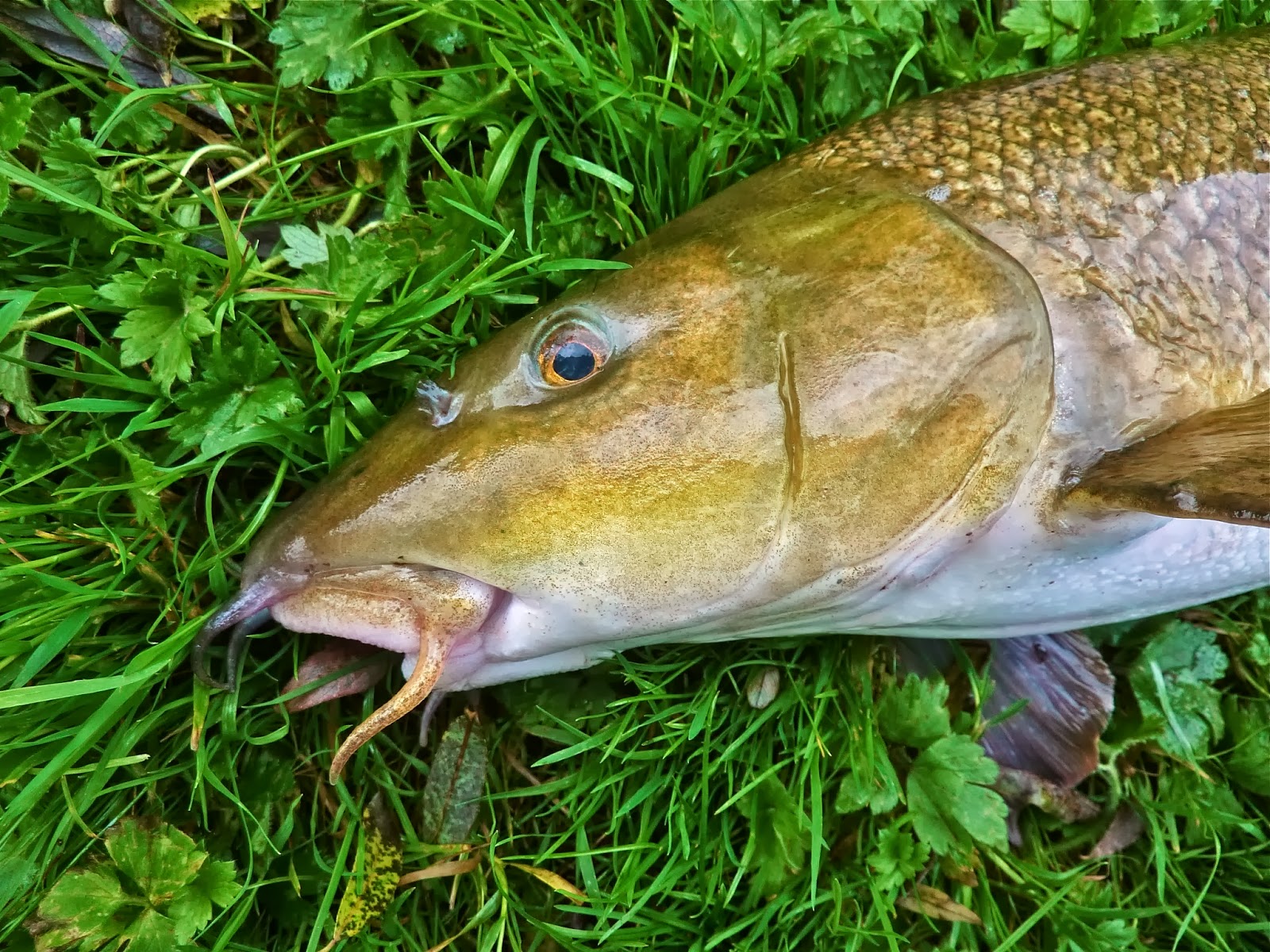
such beautiful fish - why don't I fish for barbel more often?
Firstly, I make no apologies for the lack of posts. The summer continued and I just had to go fishing! I’m also updating my film on the River Allen for the Dorset Wildlife Trust, so I guess that will have to do as an excuse.

S&TA article © Laurie Campbell
Not long ago I was invited to write a piece for the Salmon and Trout Association’s magazine ‘Gamefisher’ and having been a supporter for years, I was delighted to oblige. They do lots of wonderful conservation work, facing up to many of the challenges that our rivers suffer these days, along with other issues and I’d urge you to join them and support their invaluable work. 


a Royalty salmon

Part of the challenge we face with fisheries and fish is a lack of hard evidence and their science teams are working hard to provide the facts that we need to fight the battles ahead.

H.Avon brown trout

The S&TA are not just about salmon and trout … water is water whatever swims in it and rivers deserve all the help we can give them. Anyway, I decided to avoid any of the fishy issues in my article and have a bit of fun, so here goes.

an unhappy polar bear
 male tiger in central India - big aren't they!
Filming an animal that can eat you always adds a bit of excitement to a day in the office. My office might be an ice floe in the Arctic with a hungry polar bear threatening you, a charging tiger protecting it’s cubs in an Indian Jungle or a dark night in the South American Andes surrounded by three mountain lions.

S.American puma looking for dinner © Laurie Campbell
These adventures are just some of the privileges of being a wildlife film maker. They might also include a chance to cast a line into some remote and previously un-fished corners of our planet … a dream of every passionate angler. There’s hardly ever any time to fish when making a film but sometimes I get lucky.

what a beautiful office © Laurie Campbell
We’ve all heard about the wonderful fishing in Patagonia so when spending two years filming pumas in the mountains - and by some strange coincidence - the camera equipment happened to include a couple of rods! In the early eighties the trout were so prolific that the locals could catch them by simply twirling a spinner out, cast off an old tin.

Even in the nineties, I caught trout to ten pounds or so, especially in streams that had recently been damned by volcanic larva. In one lake the trout were feasting on dragonfly larvae in the flooded forest and a live larvae cast between the dead trees resulted in violent takes, spinning reels and blooded knuckles. The fights and resulting meals were memorable.

clunking great brown trout in the Andes rivers and lakes
In the crystal clear, fast flowing rivers, I used fry imitations, swung across the flow and these were grabbed by the most beautiful brownies of three to four pounds. There were also silver bullets that looked like grilse and about the same size but I suspect were a type of steelhead. Whatever they were, they tasted very good and when camping in the wilds, anything is better then our staple, tinned tuna.

camping in the wilds is wonderful © Laurie Campbell
One evening my assistant Donny and I had invited some scientists for a party in our tent, so at dawn I headed off to the river and caught a lovely brownie and silver thingy for our guests. I had to go filming so stored the fish on a string in the lake by our tents. Returning in the evening to cook our meal, I was shocked to pull the string in and there was nothing on the end. Our pet camp fox had nicked our prize. So it was back to tuna and rice – again - though washed down with plenty of Chilean wine, the party went off well.
befriending this fox was a mixed blessing © Laurie Campbell
on the puma highway round the lake © Laurie Campbell

big pussy cat - big teeth © Laurie Campbell
The huge lake by which I spent a lot of time also contained huge trout of twenty or more pounds. The shore was the home of my star big cat and while filming her I often saw these trout causing impressive vortices on the surface. I tried to catch one of course but kept on being disturbed by my cat as she hunted along the coast so had to use the camera instead of the rod. I had to pay attention because mountain lions do kill humans most years in the States … and this story has a tragic ending. Two anglers were fishing on the opposite shore one day when one was caught and eaten by a puma. I guess he saw it and ran instead of standing his ground as I did on many occasions but it sure puts a new twist on the famous ‘last casts’ that we all enjoy.

The privilege of being able to choose the films I made gave me the opportunity to go to one of the anglers ‘holy of holies’ – Alaska. Our film story for ITV revolved around the herring and how important it was to the ecosystem, so we bought a 35ft boat as a base and filming platform … and a place from which to have an occasional lucky dip. It would be rude not to wouldn’t it.

humpback whale too close for comfort
One of the key film sequences was the spectacle of humpback whales ‘bubble netting’. This impressive behaviour involves teamwork, for the whales have to surround a shoal of herring with a curtain of bubbles, make a high-pitched noise to drive them to the surface and then time their lunge to engulf the shoal on the surface. Our job was to be as close to this great sight as possible without disturbing the whales.

I soon became aware of the dead and injured herring that the whales had missed and reasoned that when they sank to the bottom they would provide the perfect ‘chum’ for halibut … so making note of the exact spot on the GPS … and once the whales had finished feasting, we dropped a dead fish over the side and didn’t have long to wait before the rod was wrenched down by a large flatty. I caught one which weighed 106lbs, then next morning got one so large that we couldn’t lift it into the boat. On measurement it was estimated at over 200lbs. and the titanic battle I had to raise it off the seabed will live with me forever.

We never killed any of the big ones for dinner but little ones of ten pounds or so were cooked on the Barbie at the back of the boat. We had to put up with eating either salmon or halibut every day … but someone’s got to do it!

it's the quick or the dead in Africa
Making a film on crocs for Nat.Geo. provided a chance to fish for Africa’s giant catfish, dozens of which would feast on the carcasses of the wildebeast caught by the crocs. One was about 18ft long and only had three legs ; we called it ‘Tripod’. I hooked a big catfish one night that was too big to lift up the bank so a Masai tribesman who was keen to eat it tried to spear it in the head. Alas, the spear was too blunt and he broke the line, a twist on the one that got away.

mum watches young osprey exercising new wings near the Spey
Then when filming sea eagles in Norway there were cod, when filming ospreys in Scotland, trout and salmon from the Spey … and when filming otters in Shetland and the weather was bad I had time to catch plenty of sea trout. Poached, served cold and washed down with chilled Chablis – delicious.

one for the pot
So filming and camping in the wilds can provide plenty of adventures and a diet fit for kings … and it sure beats working for a living!