Showing posts with label Salmon and Trout Assoc. Show all posts

Monday, 21 October 2013

LUCKY DIP


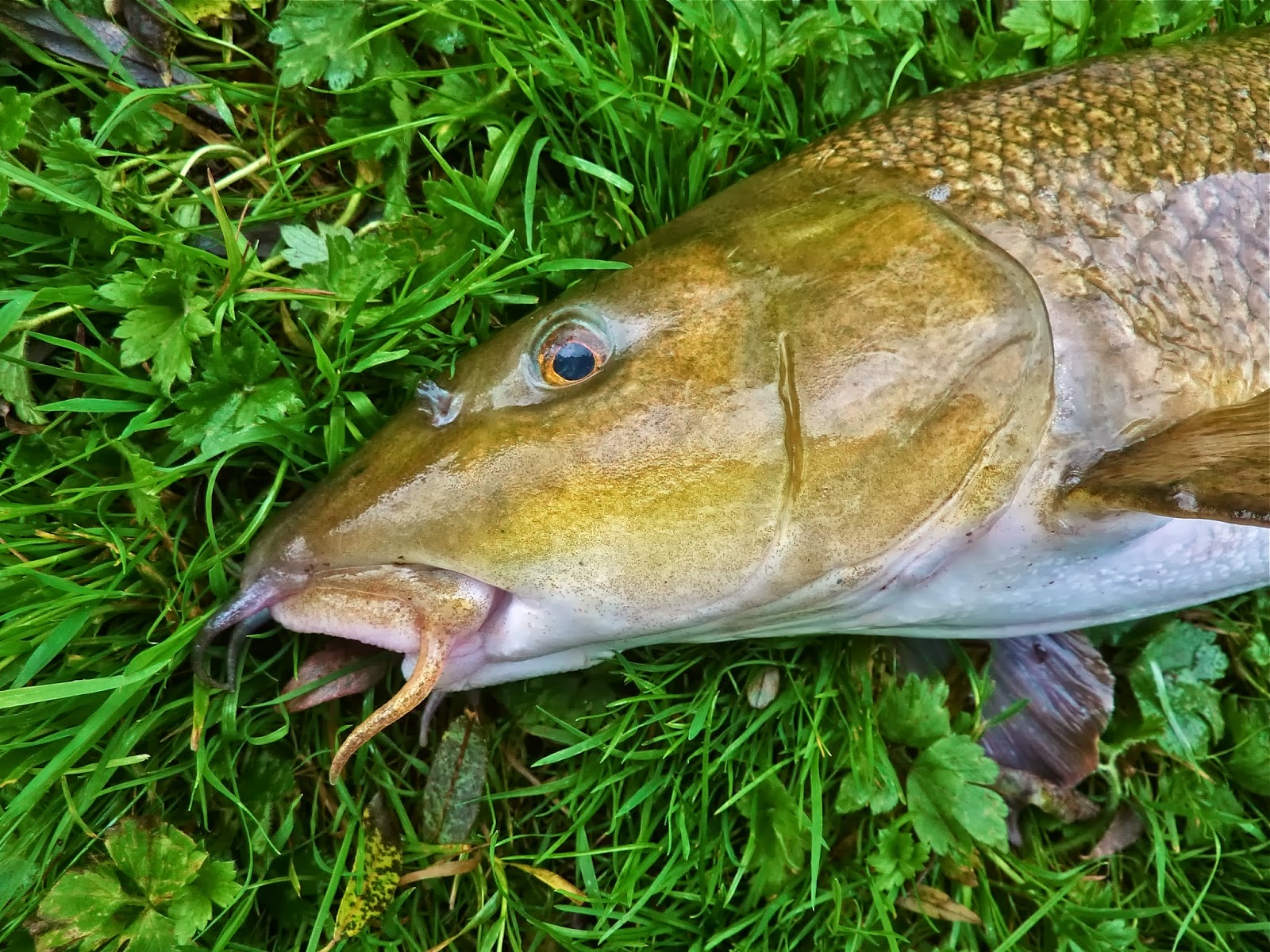
such beautiful fish - why don't I fish for barbel more often?
Firstly, I make no apologies for the lack of posts. The summer continued and I just had to go fishing! I’m also updating my film on the River Allen for the Dorset Wildlife Trust, so I guess that will have to do as an excuse.

S&TA article © Laurie Campbell
Not long ago I was invited to write a piece for the Salmon and Trout Association’s magazine ‘Gamefisher’ and having been a supporter for years, I was delighted to oblige. They do lots of wonderful conservation work, facing up to many of the challenges that our rivers suffer these days, along with other issues and I’d urge you to join them and support their invaluable work. 


a Royalty salmon

Part of the challenge we face with fisheries and fish is a lack of hard evidence and their science teams are working hard to provide the facts that we need to fight the battles ahead.

H.Avon brown trout

The S&TA are not just about salmon and trout … water is water whatever swims in it and rivers deserve all the help we can give them. Anyway, I decided to avoid any of the fishy issues in my article and have a bit of fun, so here goes.

an unhappy polar bear
 male tiger in central India - big aren't they!
Filming an animal that can eat you always adds a bit of excitement to a day in the office. My office might be an ice floe in the Arctic with a hungry polar bear threatening you, a charging tiger protecting it’s cubs in an Indian Jungle or a dark night in the South American Andes surrounded by three mountain lions.

S.American puma looking for dinner © Laurie Campbell
These adventures are just some of the privileges of being a wildlife film maker. They might also include a chance to cast a line into some remote and previously un-fished corners of our planet … a dream of every passionate angler. There’s hardly ever any time to fish when making a film but sometimes I get lucky.

what a beautiful office © Laurie Campbell
We’ve all heard about the wonderful fishing in Patagonia so when spending two years filming pumas in the mountains - and by some strange coincidence - the camera equipment happened to include a couple of rods! In the early eighties the trout were so prolific that the locals could catch them by simply twirling a spinner out, cast off an old tin.

Even in the nineties, I caught trout to ten pounds or so, especially in streams that had recently been damned by volcanic larva. In one lake the trout were feasting on dragonfly larvae in the flooded forest and a live larvae cast between the dead trees resulted in violent takes, spinning reels and blooded knuckles. The fights and resulting meals were memorable.

clunking great brown trout in the Andes rivers and lakes
In the crystal clear, fast flowing rivers, I used fry imitations, swung across the flow and these were grabbed by the most beautiful brownies of three to four pounds. There were also silver bullets that looked like grilse and about the same size but I suspect were a type of steelhead. Whatever they were, they tasted very good and when camping in the wilds, anything is better then our staple, tinned tuna.

camping in the wilds is wonderful © Laurie Campbell
One evening my assistant Donny and I had invited some scientists for a party in our tent, so at dawn I headed off to the river and caught a lovely brownie and silver thingy for our guests. I had to go filming so stored the fish on a string in the lake by our tents. Returning in the evening to cook our meal, I was shocked to pull the string in and there was nothing on the end. Our pet camp fox had nicked our prize. So it was back to tuna and rice – again - though washed down with plenty of Chilean wine, the party went off well.
befriending this fox was a mixed blessing © Laurie Campbell
on the puma highway round the lake © Laurie Campbell

big pussy cat - big teeth © Laurie Campbell
The huge lake by which I spent a lot of time also contained huge trout of twenty or more pounds. The shore was the home of my star big cat and while filming her I often saw these trout causing impressive vortices on the surface. I tried to catch one of course but kept on being disturbed by my cat as she hunted along the coast so had to use the camera instead of the rod. I had to pay attention because mountain lions do kill humans most years in the States … and this story has a tragic ending. Two anglers were fishing on the opposite shore one day when one was caught and eaten by a puma. I guess he saw it and ran instead of standing his ground as I did on many occasions but it sure puts a new twist on the famous ‘last casts’ that we all enjoy.

The privilege of being able to choose the films I made gave me the opportunity to go to one of the anglers ‘holy of holies’ – Alaska. Our film story for ITV revolved around the herring and how important it was to the ecosystem, so we bought a 35ft boat as a base and filming platform … and a place from which to have an occasional lucky dip. It would be rude not to wouldn’t it.

humpback whale too close for comfort
One of the key film sequences was the spectacle of humpback whales ‘bubble netting’. This impressive behaviour involves teamwork, for the whales have to surround a shoal of herring with a curtain of bubbles, make a high-pitched noise to drive them to the surface and then time their lunge to engulf the shoal on the surface. Our job was to be as close to this great sight as possible without disturbing the whales.

I soon became aware of the dead and injured herring that the whales had missed and reasoned that when they sank to the bottom they would provide the perfect ‘chum’ for halibut … so making note of the exact spot on the GPS … and once the whales had finished feasting, we dropped a dead fish over the side and didn’t have long to wait before the rod was wrenched down by a large flatty. I caught one which weighed 106lbs, then next morning got one so large that we couldn’t lift it into the boat. On measurement it was estimated at over 200lbs. and the titanic battle I had to raise it off the seabed will live with me forever.

We never killed any of the big ones for dinner but little ones of ten pounds or so were cooked on the Barbie at the back of the boat. We had to put up with eating either salmon or halibut every day … but someone’s got to do it!

it's the quick or the dead in Africa
Making a film on crocs for Nat.Geo. provided a chance to fish for Africa’s giant catfish, dozens of which would feast on the carcasses of the wildebeast caught by the crocs. One was about 18ft long and only had three legs ; we called it ‘Tripod’. I hooked a big catfish one night that was too big to lift up the bank so a Masai tribesman who was keen to eat it tried to spear it in the head. Alas, the spear was too blunt and he broke the line, a twist on the one that got away.

mum watches young osprey exercising new wings near the Spey
Then when filming sea eagles in Norway there were cod, when filming ospreys in Scotland, trout and salmon from the Spey … and when filming otters in Shetland and the weather was bad I had time to catch plenty of sea trout. Poached, served cold and washed down with chilled Chablis – delicious.

one for the pot
So filming and camping in the wilds can provide plenty of adventures and a diet fit for kings … and it sure beats working for a living!


Tuesday, 9 April 2013

OUR RIVERS IN CRISIS


young otters are both cute and trouble with a capital T - c. Stewart Canham

a wonderful place for wildlife ... before otter
It’s dawn and our naughty little otter has just returned to the scene of the crime, her wet footprints leading away from the pond by our cottage, trashed even worse this time because there were only half a dozen minnows that had survived for her to hunt since the last attack. If that is all she can find to eat it is symptomatic of deeper ills and I certainly worry for her future and that of the rest of our rivers wildlife.

... and after ... the trashed and fishless remains

We used to be privileged to receive regular visits to our garden from kingfishers. They found a minnow banquet waiting for them, especially valuable when the river was a raging flood but what now? If kingfishers don’t eat for three days, they die. They have already suffered a 30% decline this past year.

Paintings by Rodger McPhail from our 'Catching the Impossible' book

male and female minnows in breeding garb
God help us if we believe what the media tell us about how good our rivers are now … and even worse if we believe that otters provide a ‘litmus test’ of the health of a river as told us by the BBC among others. I was taught that predator numbers are controlled by the abundance of their prey. So with otters having to hunt minnows in garden ponds and ten otters having been killed on Dorset’s roads in just three months before Christmas, I believe that this not only indicates an increase in hungry otters but a lack of suitable prey … and if you release captive otters into a river system, does that make the river healthy? No, I don't think so either.
RSPB's Mike Clarke with Minister Richard Benyon

the updated version - not much has happened!
will politicians ever look after our freshwater ecosystems?
water gives life to all, including us!
There are so many challenges in our freshwater environment and the RSPB knows that. Admirably, they combined forces with the S&TA and Angling Trust, along with many other NGO’s to produce the impressive “Blueprint for Water” in the hope that our government would protect this vital resource more seriously. It would be good if the RSPB joined with anglers as we try to solve the problems, not compete with us over a lethal fish-eating bird. 

some birders find them attractive


dramatic decline of roach in our local River Stour
We have shed-loads of scientific evidence proving that cormorants are contributing to the loss of balance in our freshwater ecosystems, so denying they are a major part of the problem is making a solution far more difficult. Their numbers in Europe have increased rapidly since the 1980's and EU research has counted at least 500,000 [some say 2 million], their highest number for more than150yrs. They have reached epidemic proportions and we need to act now.


simply too many eating too much c. Stewart Canham


Matthew Wright, Guy Linley-Adams, Paul Knight, Janina Gray
changing anything for the better is a long process
Last year I was asked by the Salmon and Trout Association to make a film for them about their legal complaint to the European Court accusing the government of not looking after our rivers, particularly those fragile and very rare jewels flowing through the countryside, our chalk streams. As S&TA Chairman Richard Bronks suggested, "chalk streams - arguably rarer than the Amazon rainforests." 


Matthew Wright, TV and radio presenter and journalist in full flow
The film is attached below, ‘Our Rivers in Crisis’ but at risk of appearing to be overly pessimistic, I’ll list some of the threats that our rivers face, many of which appear in the 70+ pages of rigorously researched and tightly worded document, the challenge based on the intensely protected Hampshire Avon. The author is environmental lawyer Guy Linley-Adams.

-       Weather extremes leading to drought and floods.
AT's report on the dried up R.Teme
-       Abstraction leading to low flows.
brown trout cleaning silt from it's redd
-       Siltation follows, suffocating fish eggs.
-       Diffuse and spot pollution from agriculture and road run off,  killing fly life and even fish themselves. 

mayfly c. John Slader
-   Fly life has declined by 70% in many places
mayfly at sunset c. Danny Beath
-       Aquaculture an increasing threat.
Scottish sea trout survival threatened by sea lice
-      Southern salmon in serious decline.
increasingly rare despite protection c. John Slader
the 2012 smolt run down by about 50%
-       Threats from non-native invasions.
it's out there and spreading - bio-security required now!
killer shrimp a major threat c. EA

Himalayan balsam destroying river banks
killer mink
-       Signal crayfish explosion means significant loss of fish eggs.
red for danger c. Trevor Renals
-       Phosphates choke our rivers with algae.
more algae than ranunculus c. John Slader
-       Hormone disrupting chemicals create re-productive problems, in otters as well as fish.
rivers choked to death c. John Slader
-       and recently, blue-green algae causing the death of otters.

Paul Knight trying to convince the Minister Richard Benyon to act now!
We keep on being told that our rivers are cleaner than they’ve ever been, even by the BBC, but government research contradicts that statement by showing that only 20% of rivers are of ‘good ecological status’ and that 60% fail the Water Framework Directive, most due to lack of fish life.

R.Test trout but not a healthy sight c. John Slader
None of us like bad news and I know that nature, given the chance will recover remarkably well, but we have to face up to reality and work together to overcome the problems our rivers face. We should all support the work of the Salmon and Trout Associations’ scientific research [and no, they aren’t a load of toffs] but a small, professional and dedicated team gathering the essential facts that we need to support the fight. They could do so much more on behalf of all fishermen if they had more funding.

S&TA's CEO Paul Knight and scientist Janina Gray with Matthew Wright
One of the most critical omissions in angling’s fight to protect fisheries is the lack of scientific research and the facts that enable arguments to be won. Personally, I dream of the day when the S&TA have enough support to be able to produce far more fish science, rather as the British Trust for Ornithology and their army of volunteers, me among them, gather mountains of bird facts which the RSPB are able to use to support their campaigns. Trouble is, anglers are notorious for their apathy when it comes to giving anything back to the sport that they purport to love. 


What’s more, fish are far more difficult to research than birds so the truth of their declines is always going to be difficult to substantiate. We must hope that this recent S&TA initiative, produced at great expense, leads to the government being forced by the EU to uphold the law and actually provide the funding to save our rivers.

suffocated with algae c. John Slader
The much-maligned EA have done lots of wonderful work in our neck of the woods but they can’t fulfil all their objectives to improve our rivers if they don’t have the money to act, so it’s up to us as individuals to contribute to the cause by supporting our voluntary organisations. I know that these are difficult times but just a few quid now and then will make a big difference and provide us with a future not of despair but of hope. It’s the least we can do to save our fish and other wonderful freshwater wildlife.

great crested grebe by Rodger McPhail

spectacular strike action from my adventures in Scotland
OK, enough depressing words from me … here’s the film.